
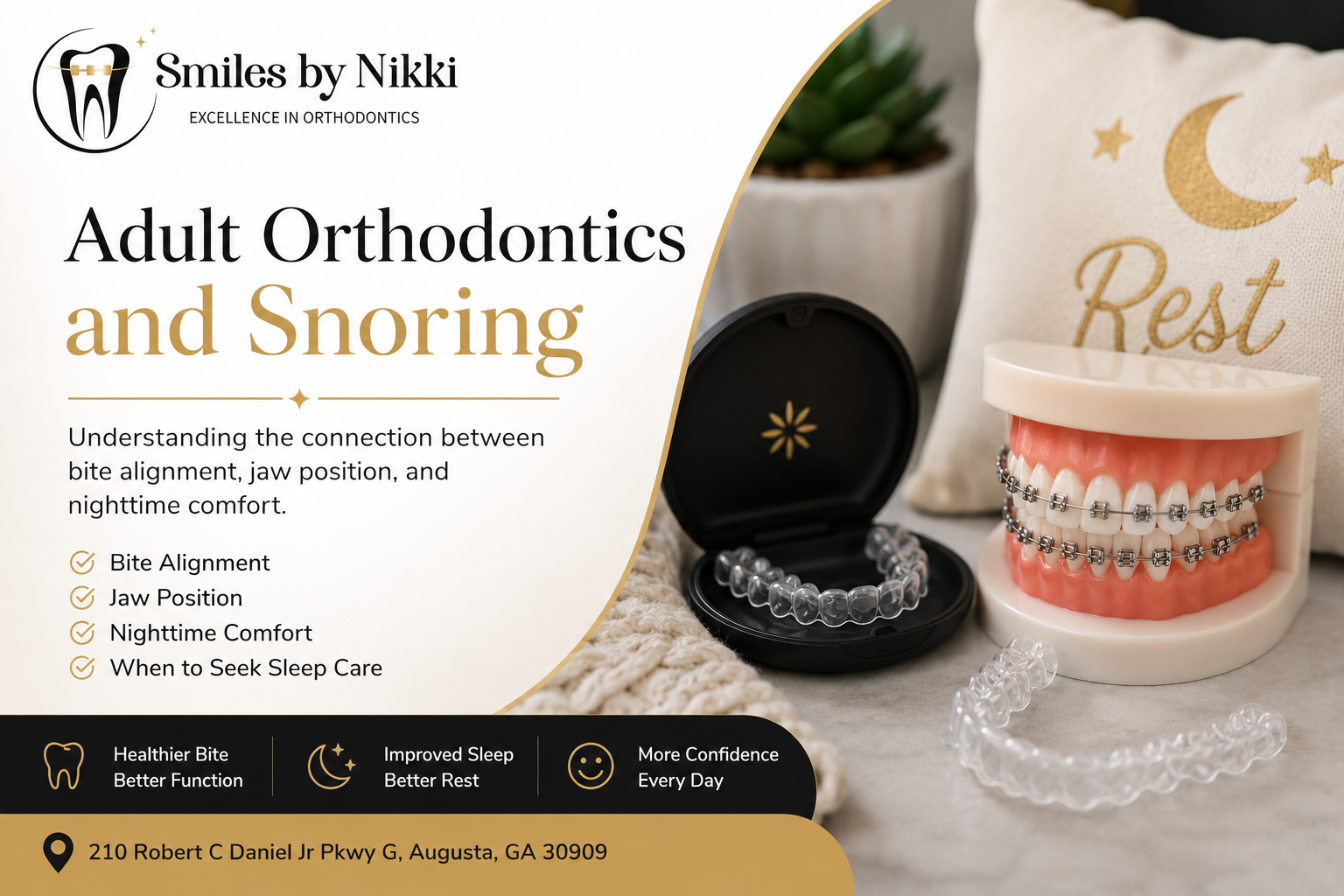
Adult Orthodontics in Augusta, GA: Can Treatment Help With Breathing or Snoring?
Quick Answer: Braces and clear aligners can correct crowding, tooth alignment, and diagnosed bite problems, but they are not established treatments for snoring or sleep apnea. Adults who snore loudly or experience gasping, breathing pauses, morning headaches, daytime fatigue, or difficulty concentrating should discuss those symptoms with a medical provider. An orthodontist can evaluate a separate tooth or jaw concern and coordinate care when appropriate.
Can Orthodontic Treatment Stop Snoring?
Routine orthodontic treatment should not be expected to stop snoring. Braces and clear aligners move teeth and correct orthodontic conditions, but snoring may result from several factors that tooth movement does not address.
Snoring can be associated with nasal obstruction, relaxed throat tissues, sleep position, alcohol use, body weight, airway anatomy, medication effects, or obstructive sleep apnea. Not everyone who snores has sleep apnea, but frequent loud snoring can be one of its warning signs.
Sleep apnea is a medical condition in which breathing repeatedly stops and restarts during sleep. Diagnosis may involve an evaluation by a medical provider and a sleep study.
Orthodontic treatment may still be appropriate when an adult who snores also has crowding, tooth shifting, an open bite, a crossbite, or another diagnosed orthodontic concern. In that situation, the goal is to correct the teeth and bite rather than promise an improvement in snoring.
What Can an Orthodontist Evaluate?
During an adult orthodontic consultation, Dr. Nikki Sangha can evaluate tooth position, crowding, spacing, bite relationships, previous orthodontic relapse, and how the upper and lower teeth fit together.
The consultation may also include questions about symptoms or existing care that could affect orthodontic treatment planning, such as:
- Jaw discomfort or clenching
- Dry mouth
- Previous braces or clear aligners
- Retainer use
- A diagnosed sleep disorder
- CPAP or oral-appliance use
- A previous sleep study
These details provide context, but they do not allow an orthodontist to diagnose the cause of snoring or confirm sleep apnea.
An orthodontist may recognize symptoms that warrant medical referral and can coordinate with other providers when a patient has both an orthodontic condition and a diagnosed sleep-related breathing disorder. The American Association of Orthodontists states that orthodontists may screen and refer patients, but they do not independently diagnose and treat obstructive sleep apnea.
Braces, Clear Aligners, and Sleep Appliances Are Different
Braces and clear aligners are orthodontic treatments. They move teeth to address concerns such as crowding, spacing, tooth rotation, relapse, and certain bite problems.
An oral sleep appliance has a different purpose. It is generally worn during sleep and is designed to hold or stabilize the lower jaw in a position that supports airflow.
Oral-appliance therapy for adult snoring or obstructive sleep apnea should follow an appropriate sleep evaluation. Current sleep-medicine guidance recommends that a sleep physician diagnose primary snoring before oral-appliance treatment because snoring can be a sign of obstructive sleep apnea. When an oral appliance is prescribed, a qualified dentist should generally provide a custom, adjustable device and monitor its effects.
A clear aligner should not be confused with a sleep appliance simply because both are removable and fit over the teeth. They are designed for different purposes.
When Might Braces or Clear Aligners Be Appropriate?
Braces or clear aligners may be appropriate when an adult has an orthodontic condition that needs treatment regardless of the snoring concern.
Treatment may be recommended for:
- Crowded, rotated, or shifted teeth
- Gaps between teeth
- Orthodontic relapse
- Crossbite, open bite, or another malocclusion
- Tooth relationships that interfere with normal bite function
- Alignment concerns that make oral hygiene more difficult
Braces remain attached to the teeth and can manage many types of tooth movement. Clear aligners use removable trays and may be suitable when the planned movements can be achieved effectively and the patient can wear the trays consistently.
The appropriate option depends on the examination, required tooth movement, oral health, treatment complexity, and patient preferences. Neither option should be selected primarily as a treatment for unexplained snoring.
When Can Jaw Surgery Enter the Discussion?
Some adults have a significant skeletal jaw discrepancy that cannot be corrected through tooth movement alone. When jaw position affects bite function, facial balance, chewing, or other structural concerns, orthodontic treatment may be coordinated with an oral and maxillofacial surgeon.
Orthognathic surgery is not a routine recommendation for adults who snore. If surgery is being considered as part of treatment for diagnosed obstructive sleep apnea, planning should involve the appropriate medical, sleep, surgical, and dental professionals.
An orthodontic consultation can determine whether there is a jaw-related orthodontic condition that deserves further evaluation. It cannot determine on its own whether surgery is appropriate for a sleep disorder.
When Should Medical Sleep Evaluation Come First?
Speak with a medical provider when snoring is frequent, loud, or accompanied by symptoms that may suggest disrupted nighttime breathing.
Possible warning signs include:
- Breathing that repeatedly stops and starts
- Gasping or choking during sleep
- Excessive daytime sleepiness
- Morning headaches
- Dry mouth upon waking
- Difficulty focusing or reacting
- Feeling tired despite getting enough time in bed
The National Heart, Lung, and Blood Institute recommends discussing these symptoms with a healthcare provider, who may recommend a sleep study when appropriate.
Do not delay medical evaluation while waiting to see whether orthodontic treatment changes the symptoms. If sleep apnea is diagnosed, treatment may include positive airway pressure therapy, lifestyle changes, an appropriately prescribed oral appliance, surgery, or another option selected by the medical team.
Positive airway pressure remains a standard treatment for adults with obstructive sleep apnea, particularly when excessive sleepiness or other significant effects are present.
What Should You Discuss During an Orthodontic Consultation?
Tell the orthodontic team about any diagnosed sleep condition or treatment that may affect the teeth, bite, or treatment plan.
Useful information may include:
- Whether you use CPAP
- Whether you wear an oral sleep appliance
- Whether you have completed a sleep study
- Whether another provider is managing your snoring or sleep apnea
- Whether you have jaw discomfort, clenching, or tooth wear
- Whether your teeth have shifted after previous orthodontic treatment
An oral sleep appliance can affect how the teeth meet over time, so it is important for the orthodontist to understand how it is being used. Patients receiving both orthodontic and sleep-related care may need communication between their providers.
Frequently Asked Questions
Adult Orthodontic Consultations in Augusta, GA
Smiles by Nikki can evaluate crowding, spacing, tooth shifting, bite relationships, and other orthodontic concerns in adults who also report snoring or sleep-related symptoms.
If an orthodontic condition is present, Dr. Sangha can explain whether braces, clear aligners, monitoring, or another orthodontic option may be appropriate. Snoring, gasping, breathing pauses, morning headaches, or daytime fatigue should also be discussed with a medical provider or sleep specialist.
Orthodontic treatment and medical sleep care serve different purposes, but they may need to be coordinated when a patient has both an orthodontic condition and a diagnosed sleep disorder.