
What Is a Palatal Expander and Does My Child Need One?
Quick Answer: A palatal expander widens the upper jaw and may be recommended when an orthodontic examination confirms a narrow upper jaw, certain crossbites, or a space problem that could benefit from expansion during growth. Not every child with crowding needs an expander, and the best timing depends on jaw growth, dental development, and the treatment goal.
What Is a Palatal Expander and When Is It Used?
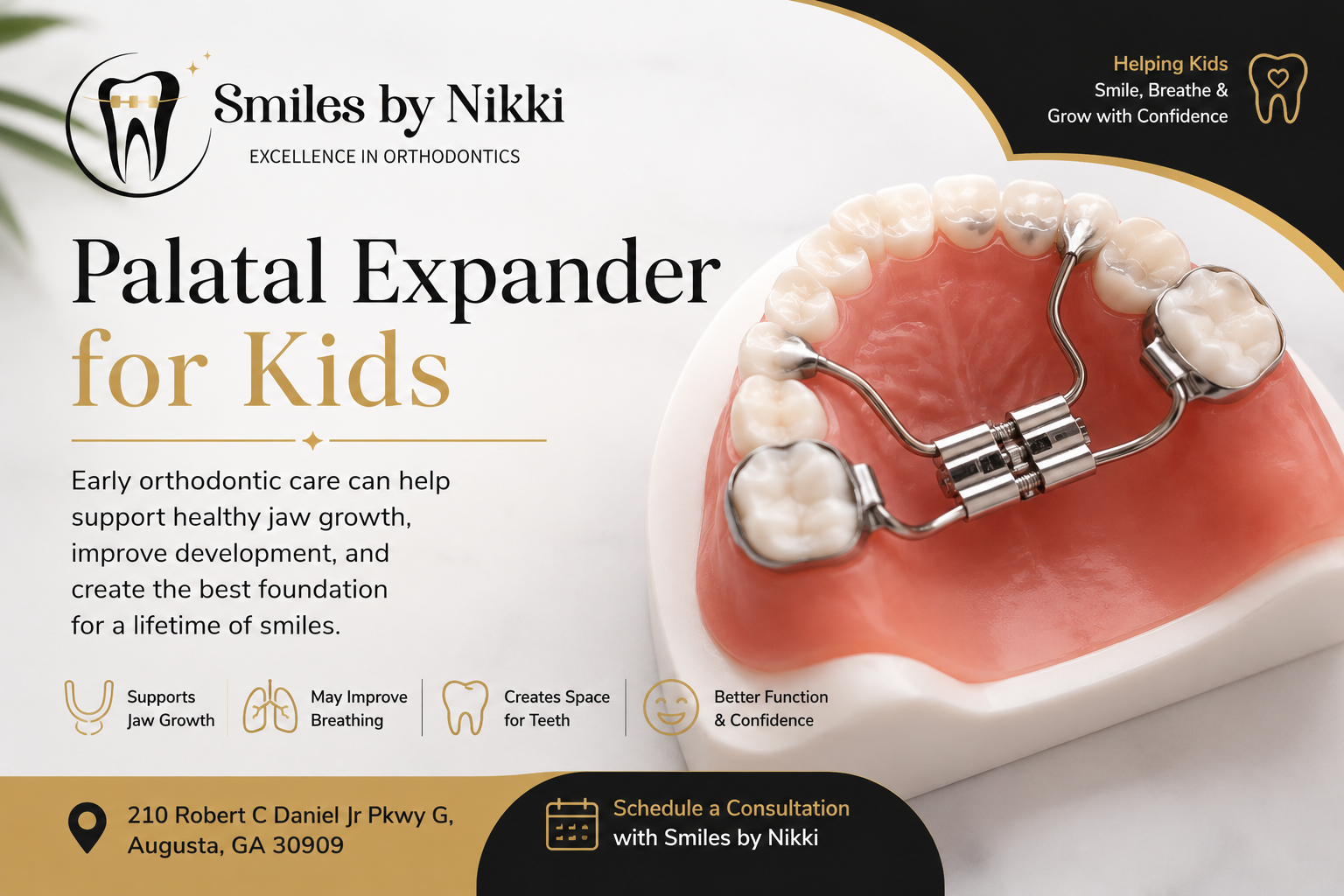
A palatal expander is a custom orthodontic appliance used to increase the width of the upper jaw. Expansion is often easier during growth, before the connection between the two sides of the upper jaw becomes more mature.
Some expanders are fixed to the upper back teeth, while others use a different design. Certain appliances are activated with a small key, but others rely on springs, wires, or another mechanism and do not require adjustments at home.
Different appliances can produce different combinations of tooth movement and jaw expansion. The orthodontist selects the design based on the child’s age, growth, bite, and diagnosis.
One common reason for treatment is a posterior crossbite, in which some of the upper back teeth bite inside the lower teeth. Expansion may improve the relationship between the upper and lower jaws while the child is still growing.
An expander may also be considered when crowding or limited space is associated with a narrow upper jaw. In selected cases, it may create additional room as part of a broader plan for an unerupted or impacted tooth, although expansion does not guarantee that the tooth will erupt without further care.
Not every child with crowding, a crossbite, or a narrow-looking smile needs an expander. The decision should be based on an orthodontic examination and diagnostic records rather than appearance alone.
What Age Is Best for a Palatal Expander?
There is no single best age for every child. Expanders are commonly used while the upper jaw is still growing, but timing depends on skeletal maturity, dental development, the type of bite problem, and the treatment goal.
The American Association of Orthodontists recommends an initial orthodontic evaluation around age seven. This allows the orthodontist to examine how the permanent teeth, jaws, and bite are developing.
An evaluation at seven does not mean treatment must begin immediately. Some children benefit from early expansion, while others are monitored for several years before treatment is considered.
Does a Palatal Expander Hurt?
Pressure and temporary tenderness are common after an adjustment, particularly around the upper teeth or roof of the mouth. Sharp, severe, or worsening pain should be reported to the orthodontic office.
Speech and swallowing may feel different at first, and the child may produce more saliva while adjusting. These activities usually become easier with practice, although adjustment time varies.
Soft foods such as yogurt, pasta, eggs, soup, applesauce, and mashed potatoes may be easier during the first few days. Persistent sores or significant difficulty eating should also be reported.
How Does Palatal Expander Treatment Work?
Treatment begins with a comprehensive orthodontic examination. Dr. Nikki Sangha can review the child’s teeth, bite, available space, and jaw development. Diagnostic photos and X-rays may also be taken when appropriate.
If expansion is recommended, the appliance is custom-made for the child. Some designs are activated at home with a key, while others are adjusted differently. Parents should follow only the schedule provided by the orthodontic team and should never add extra turns or change the schedule without instructions.
Active expansion may last several weeks, although the exact time varies. Once the desired width is reached, turning usually stops and the appliance often remains in place during a holding period. This gives the expanded area time to stabilize before the appliance is removed.
Regular follow-up visits allow the orthodontist to monitor the bite, appliance fit, tooth and gum health, and response to treatment.
Will My Child Still Need Braces?
Many children still need braces or another phase of orthodontic treatment after expansion because the appliance changes jaw width rather than fully positioning every tooth.
Later treatment may align crowded or rotated teeth, close spaces, and refine how the upper and lower teeth fit together. Early expansion may address a developing crossbite or space problem, but it does not guarantee shorter or simpler treatment later.
Clear aligners may be appropriate for some older children or teens, depending on the required tooth movements, treatment stage, and ability to wear the trays consistently.
How Should a Palatal Expander Be Cleaned?
Food can collect around a fixed expander, so children should brush carefully around the appliance, teeth, and gumline and rinse after meals when possible.
Sticky, hard, or chewy foods may loosen or damage a fixed appliance. Gum, caramel, taffy, hard candy, ice, popcorn kernels, and similar foods should generally be avoided.
Cleaning instructions and food restrictions may differ for removable appliances. Parents should follow the guidance provided for their child’s specific device.
When Should Parents Contact the Orthodontic Office?
Contact the office if the expander becomes loose, breaks, causes a sharp or persistent sore, will not turn as directed, or significantly interferes with eating or swallowing.
Parents should also call if the activation key becomes stuck or they are unsure whether a turn was completed correctly. Do not add another turn to make up for an uncertain adjustment unless the orthodontic team instructs you to do so.
Do not attempt to repair, remove, or continue adjusting a damaged appliance without speaking with the office.
Can a Palatal Expander Treat Mouth-Breathing or Snoring?
A palatal expander should be recommended for a confirmed orthodontic condition, such as a narrow upper jaw or crossbite. It should not be presented as an independent treatment for mouth-breathing, snoring, or sleep apnea.
If a child frequently snores, gasps, has pauses in breathing, or regularly struggles to breathe through the nose, parents should discuss those symptoms with the child’s pediatrician or another appropriate medical provider. An orthodontic evaluation may still be useful when a bite or jaw-width concern is also present, but it does not replace medical evaluation.
Frequently Asked Questions
Palatal Expander Evaluations in Augusta, GA
Smiles by Nikki evaluates children with crossbites, crowding, limited space, and other developing orthodontic concerns.
During the consultation, Dr. Sangha can complete a comprehensive orthodontic examination, review diagnostic photos and X-rays when appropriate, and discuss whether expansion, monitoring, braces, or another approach is recommended.
Not every child needs early orthodontic treatment. The purpose of the evaluation is to determine whether treatment would be helpful now or whether continued observation is the better choice.