

What to Eat (and Avoid) With Braces or Aligners
Orthodontic treatment is about more than appointments and adjustments, what you eat plays a major role in how smoothly your treatment progresses. The right food choices help protect braces and aligners, reduce discomfort, and keep your treatment on track. On the other hand, certain foods can damage appliances, cause delays, or lead to unnecessary orthodontic visits.
Whether you’re wearing braces or clear aligners, understanding how your diet impacts your orthodontic care can make the entire experience easier and more successful.
Foods to Avoid With Braces
Braces are durable, but they aren’t indestructible. Certain foods can bend wires, break brackets, or get stuck in hard-to-reach places, increasing the risk of damage and decay.
Sticky foods are one of the biggest culprits. Items like caramel, taffy, gummy candies, and chewing gum can pull on brackets and wires, loosening them or causing breakage. These foods are also difficult to clean out of braces, which can lead to plaque buildup and cavities.
Hard foods should also be avoided, especially biting directly into them. Nuts, ice, hard candies, popcorn kernels, and crunchy chips can crack brackets or distort wires. Even foods like apples or crusty bread can cause problems if eaten whole—cutting them into small pieces is a safer option.
Chewy snacks, such as bagels, licorice, or tough meats, can put excessive pressure on braces and make cleaning more difficult. These foods often stick around brackets and wires, increasing the chance of irritation or appliance damage.
Braces-Friendly Foods
Fortunately, there are plenty of delicious and satisfying foods that are safe to eat during orthodontic treatment.
Soft proteins are an excellent choice and help keep meals filling and nutritious. Foods like eggs, fish, shredded chicken, meatballs, tofu, and slow-cooked meats are easy to chew and gentle on braces. These options are especially helpful during the first few days after an adjustment when teeth may feel sore.
Dairy products are another braces-friendly category. Yogurt, cottage cheese, soft cheeses, milk, and smoothies provide calcium and protein without putting stress on orthodontic appliances. They’re also great options for snacks or quick meals.
Cooked vegetables are much easier to manage than raw ones. Steaming or roasting vegetables like carrots, broccoli, zucchini, and squash softens them enough to eat comfortably while still providing essential nutrients. Pairing these with soft grains or proteins can make balanced, braces-safe meals.
Eating With Clear Aligners
Clear aligners offer more flexibility when it comes to eating, but they still require careful habits to protect your treatment.
Aligner trays should always be removed before eating or drinking anything other than water. Eating with aligners in place can stain them, warp the trays, and trap food against the teeth, increasing the risk of cavities.
Before reinserting aligners, it’s important to clean both your teeth and the trays. Brushing or rinsing after meals helps prevent food particles and bacteria from being sealed against the teeth. This routine keeps aligners clear, fresh, and effective while supporting overall oral health throughout treatment.
Smart Food Choices Protect Your Smile
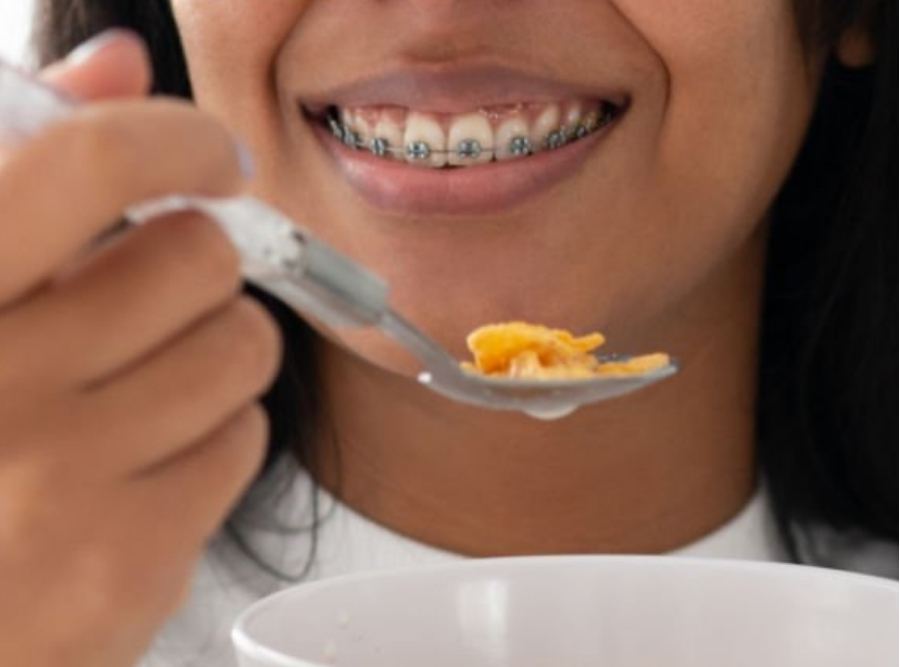
Orthodontic treatment is a temporary phase, but the habits you build during it can have long-lasting benefits. Making smart food choices helps prevent damage, reduces discomfort, and keeps your treatment moving forward as planned. By choosing braces- and aligner-friendly foods and avoiding risky snacks, you’re actively protecting your smile and supporting the best possible results.