
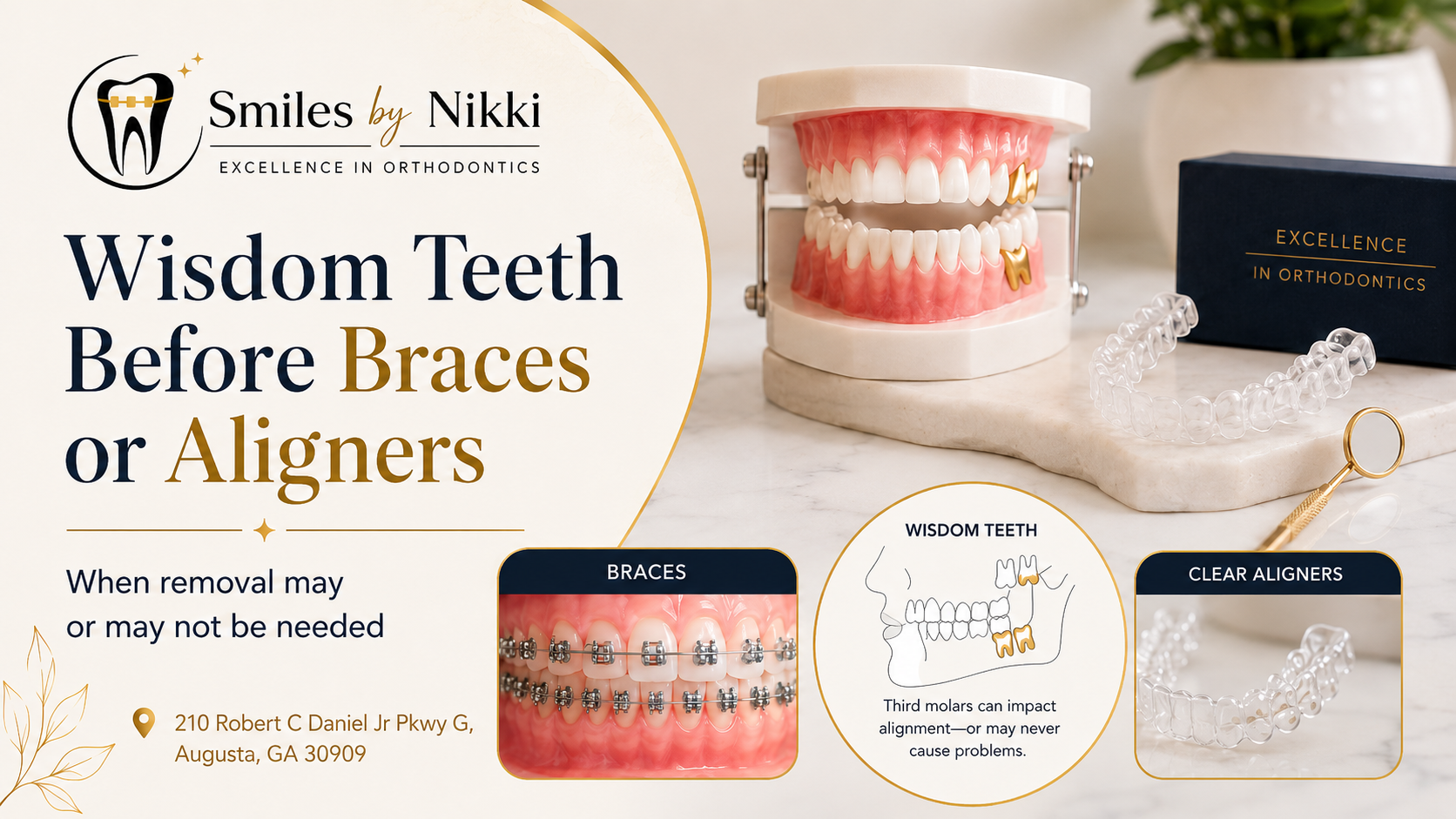
Do I Need to Remove My Wisdom Teeth Before Getting Braces or Clear Aligners?
Quick Answer:
In many cases, you do not need to remove your wisdom teeth before getting braces or clear aligners. Wisdom teeth removal may be recommended if they are impacted, painful, infected, hard to clean, damaging nearby teeth, or blocking planned tooth movement. The decision depends on your X-rays, symptoms, tooth position, bite, and orthodontic treatment plan.
When Wisdom Teeth May or May Not Need Removal Before Orthodontic Treatment
| Situation | What It May Mean | Possible Next Step |
| Wisdom teeth are healthy, fully erupted, and easy to clean | They may not interfere with braces or clear aligners | Monitor during regular dental and orthodontic visits |
| Wisdom teeth are impacted | They may cause pain, swelling, infection, or damage to nearby teeth | Further evaluation may be recommended |
| Wisdom teeth are blocking planned tooth movement | They may interfere with the orthodontic plan | Removal may be discussed before treatment begins |
| Wisdom teeth are still developing but not causing problems | They may not need treatment right away | Monitor with exams and X-rays |
| Wisdom teeth are painful, infected, or hard to clean | They may create oral health concerns | Your orthodontist may coordinate with your dentist or oral surgeon |
What Are Wisdom Teeth?
Wisdom teeth are the third molars in the very back of the mouth. They usually start developing during the teen years and may begin coming in during the late teen years or early adult years.
Some wisdom teeth grow in normally and do not cause problems. Others become impacted, which means they are trapped under the gums, angled against another tooth, or only partly through the gums.
Impacted wisdom teeth can sometimes lead to pain, swelling, infection, decay, gum problems, or damage to nearby teeth. This is why your orthodontist, dentist, or oral surgeon may want to check them before you begin braces or clear aligners.
Do Wisdom Teeth Have to Come Out Before Braces?
No, wisdom teeth do not always have to come out before braces.
If your wisdom teeth are healthy, not causing pain, and not blocking tooth movement, you may be able to keep them. Many patients start braces while their wisdom teeth are still developing.
Removal may be recommended if the wisdom teeth are causing a clear problem or if they may interfere with your orthodontic treatment plan. Dr. Nikki looks at the full picture before recommending braces, so Augusta patients can feel confident about starting treatment with a plan that fits their needs.
Do Wisdom Teeth Have to Come Out Before Clear Aligners?
Clear aligners can often be started even if wisdom teeth are still present.
Aligners work by gently moving teeth with a series of custom trays. If your wisdom teeth are not affecting your bite, spacing, or treatment goals, they may not need to be removed first.
However, if wisdom teeth are crowding the back of the mouth, causing pain, or getting in the way of planned tooth movement, your orthodontist may recommend having them evaluated first. This is one reason it helps to schedule an orthodontic consultation in Augusta, GA before starting aligner treatment.
Can Wisdom Teeth Ruin Braces or Aligner Results?
Wisdom teeth are often blamed for teeth shifting, but they are not always the main cause.
Teeth can move over time for many reasons. Aging, bite pressure, grinding, gum changes, and not wearing retainers can all play a role. That is why retainers are so important after braces or clear aligners.
If your wisdom teeth may cause future issues, your orthodontist can monitor them and guide you on the right timing. But for many patients, protecting results comes down to good follow-up care and consistent retainer wear.
When Wisdom Teeth Removal May Be Recommended
Wisdom teeth removal may be recommended before or during orthodontic treatment if there is a clear reason.
Common reasons include pain, infection, decay, swelling, gum problems, or damage to nearby teeth. Removal may also be considered if the wisdom teeth are impacted or blocking the movement needed for braces or clear aligners.
X-rays help show what is happening below the gums. They allow your provider to see whether the wisdom teeth are growing straight, angled, trapped, or too close to nearby teeth or nerves.
The decision should be based on your mouth, your symptoms, and your treatment plan. If removal is needed, your orthodontist may coordinate with your general dentist or an oral surgeon.
When You May Not Need Wisdom Teeth Removed
You may not need wisdom teeth removed if they are healthy, fully erupted, easy to clean, and not affecting your bite.
Some patients have enough room for wisdom teeth to grow in properly. Others may have wisdom teeth that are still developing but are not causing any current concerns.
In these cases, your orthodontist may simply monitor them over time. This is common for teens and young adults whose wisdom teeth are still changing.
Braces, Clear Aligners, and Wisdom Teeth in Teens
Teen patients often start thinking about wisdom teeth around the same time they are ready for braces.
In many cases, teens do not need to wait for wisdom teeth to come in before starting orthodontic treatment. Waiting too long can allow crowding, spacing, or bite problems to become harder to correct.
The American Association of Orthodontists recommends that children have their first orthodontic checkup by age 7. That does not mean every child needs treatment at that age. It simply helps an orthodontist monitor growth, tooth development, and bite concerns early.
At Smiles by Nikki, Dr. Nikki can monitor wisdom teeth as part of the treatment plan. If removal becomes necessary, she can help guide the timing and coordinate with the right dental provider or oral surgeon.
Braces, Clear Aligners, and Wisdom Teeth in Adults
Adults can also begin orthodontic treatment even if they still have wisdom teeth.
For adult patients, the main concern is whether the wisdom teeth are healthy and stable. If they are causing pain, swelling, infection, decay, or pressure on nearby teeth, they may need attention before starting braces or clear aligners.
Adult orthodontic treatment in Augusta, GA should always begin with a thoughtful exam. A healthy foundation helps make treatment smoother, safer, and more predictable.
What Happens If Wisdom Teeth Come In During Treatment?
If your wisdom teeth start coming in while you are wearing braces or clear aligners, do not panic.
Your orthodontist can monitor the situation and decide whether anything needs to change. In some cases, no action is needed. In other cases, you may be referred for a wisdom teeth evaluation.
Let your orthodontic team know if you notice pain, swelling, pressure, or changes near the back of your mouth. Small concerns are easier to manage when they are checked early.
Why an Orthodontic Evaluation Matters
Before starting orthodontic treatment, it is important to look at more than crooked front teeth.
Dr. Nikki Sangha checks your bite, spacing, jaw, tooth position, and smile goals. X-rays may also be used to see teeth that have not fully come in yet, including wisdom teeth.
This careful planning helps determine whether braces, clear aligners, or another treatment option is the best fit. It also helps you understand what to expect before treatment begins.
How Smiles by Nikki Helps Patients Make the Right Choice
At Smiles by Nikki, orthodontic care is personal. Dr. Nikki Sangha and her team take time to explain your options in clear, simple language.
The practice provides orthodontic care for children, teens, and adults in Augusta, GA. Treatment options include braces, clear aligners, early orthodontic treatment, adult orthodontics, retainers, and other smile-focused services.
Patients also appreciate the welcoming all-woman team, free consultations, and multilingual care in English, Spanish, Hindi, and Punjabi. Whether you are a parent planning care for your child, a teen getting ready for braces, or an adult thinking about clear aligners, the team is here to help you make a confident decision.
FAQ: Wisdom Teeth, Braces, and Clear Aligners
Schedule a Free Consultation With Smiles by Nikki in Augusta, GA
If you are wondering whether you need wisdom teeth removed before braces or clear aligners, the best next step is a consultation.
At Smiles by Nikki, Dr. Nikki Sangha, DMD provides personalized orthodontic treatment for children, teens, and adults in Augusta, GA. Our team will review your smile, check your bite, answer your questions, and help you understand whether your wisdom teeth need monitoring, referral, removal, or no action before treatment.
Schedule your free consultation today and take the first step toward a healthier, more confident smile.