
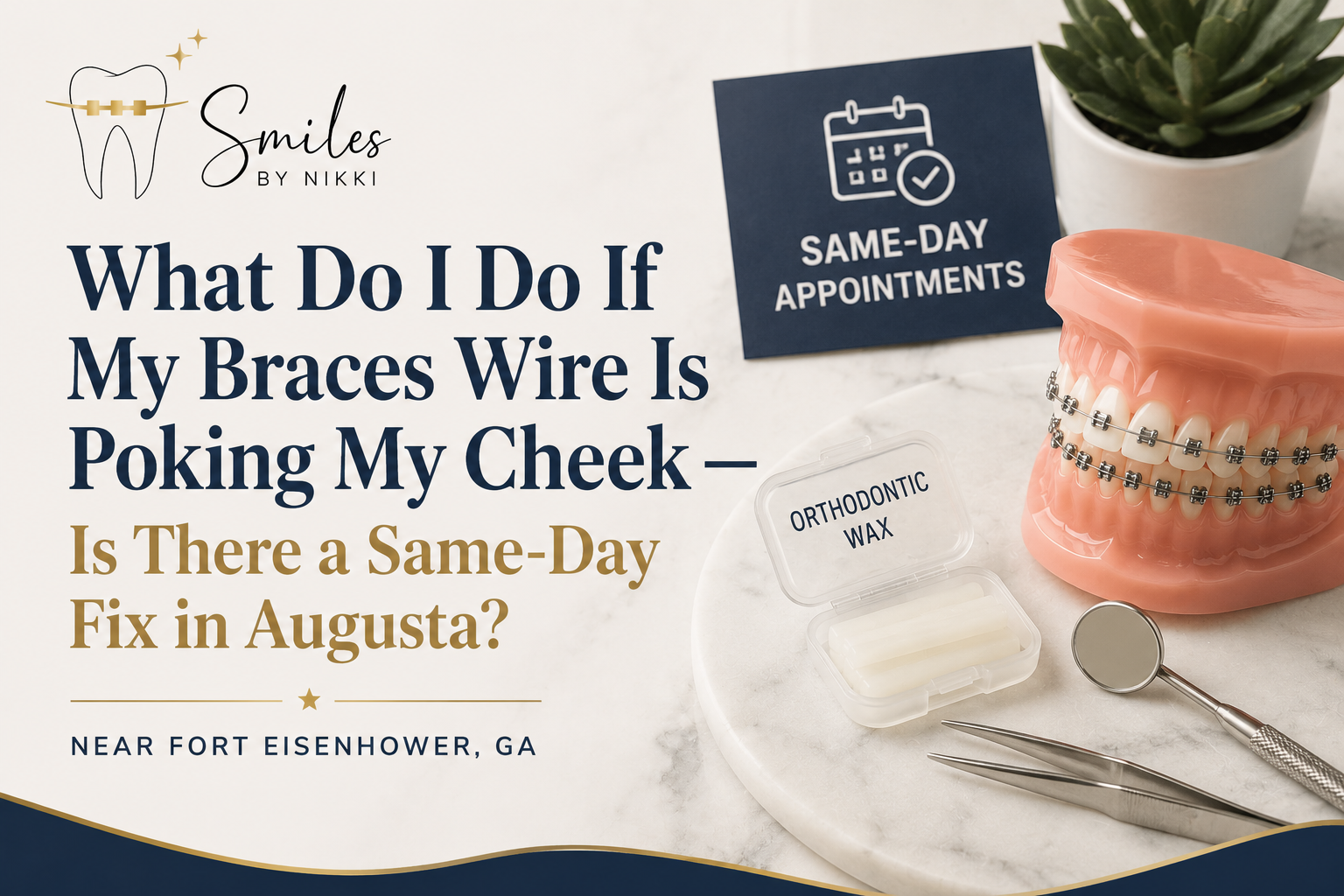
What Do I Do If My Braces Wire Is Poking My Cheek — Is There A Same-Day Fix In Augusta?
Quick Answer:
If a braces wire is poking your cheek, cover the sharp end with orthodontic wax or gently push it toward the tooth with a clean cotton swab or pencil eraser for temporary relief. Then call your orthodontist. A poking wire is usually not a me`dical emergency, but an orthodontic office may be able to offer a quick comfort appointment or same-day repair depending on availability.
Few things can turn an otherwise normal day with braces into an uncomfortable one as quickly as a sharp wire rubbing against the inside of your cheek.
Fortunately, a poking orthodontic wire is a common problem and usually isn’t dangerous. The American Association of Orthodontists (AAO) identifies poking or loose wires as an orthodontic issue that should be reported to your orthodontist, although many minor problems can be managed temporarily at home until you’re able to be seen.
If you’re in Augusta, Evans, Grovetown, or near Fort Eisenhower, here’s what you can safely do while arranging professional help.
Why Is My Braces Wire Suddenly Poking My Cheek?
A wire can begin irritating your cheek even when nothing is necessarily “wrong” with your braces.
As your teeth move into their new positions, the end of the archwire can sometimes extend farther beyond the last bracket or tube than it did previously. A wire can also shift slightly to one side, making one end feel longer.
In other cases, a small ligature wire around a bracket may have moved outward and started rubbing against your cheek or lip.
Whatever the cause, don’t ignore persistent irritation. A sharp wire repeatedly rubbing the same area can make your cheek sore and uncomfortable.
What Can I Do at Home for a Poking Braces Wire?
Your goal at home isn’t to permanently repair your braces. It’s to protect your cheek and make yourself comfortable until your orthodontist can tell you what to do next.
The AAO recommends several simple measures for managing a protruding orthodontic wire.
Start With Orthodontic Wax
Orthodontic relief wax is usually the easiest place to start.
Wash your hands, then use a tissue or cotton swab to dry the bracket and wire as much as possible. Pinch off a small piece of orthodontic wax, roll it between clean fingers, and press it over the sharp area.
The wax creates a smooth barrier between the metal and the inside of your cheek.
If the wax falls off while eating or brushing, simply replace it as needed. Keeping a small container of orthodontic wax in a school bag, purse, car, or travel kit can be particularly helpful when you have braces.
Try Gently Tucking the Wire Back
If you can clearly see the offending wire, you may be able to gently move it away from your cheek.
The AAO suggests using a clean cotton swab or the eraser end of a pencil to carefully push a protruding wire toward the tooth so it lies flatter.
This is particularly useful when a small wire end or ligature is sticking outward. Don’t force anything that doesn’t move easily. If you’re unsure what you’re looking at, cover the area with wax and call your orthodontist instead.
What If the Main Archwire Has Shifted?
Sometimes a wire seems to have suddenly become much longer on one side because the archwire has shifted.
This isn’t always something you should try to correct yourself. If you’re not certain why the wire is sticking out, take a clear look in the mirror and call your orthodontist. The office may be able to determine what happened from your description or ask you to send a photo before deciding whether you need to come in.
Should I Cut a Poking Braces Wire Myself?
It’s better to contact your orthodontist before cutting an orthodontic wire whenever possible.
Orthodontic wires vary in thickness and function, and cutting the wrong part can interfere with your appliance or treatment. There’s also a possibility that a clipped piece could fall into your mouth.
If you cannot make the area comfortable with wax or by gently repositioning the wire, call your orthodontist and explain what’s happening. They can advise you on the safest next step based on your particular braces and the location of the wire.
If the problem happens after hours, check your orthodontist’s voicemail or other patient instructions for guidance on urgent orthodontic problems.
Can an Augusta Orthodontist Fix a Poking Wire the Same Day?
Possibly. Call the orthodontic office as soon as you notice the problem and ask whether a same-day comfort appointment is available.
A protruding wire may only require a relatively simple adjustment, such as clipping, repositioning, or securing the irritating portion. Whether you can be seen immediately depends on the practice’s schedule and the nature of your problem.
If you’re already an established patient, contact your orthodontist first. Explain that your braces wire is digging into your cheek and tell the team whether you’re experiencing significant irritation or pain.
If you’ve recently moved to Augusta or Fort Eisenhower and haven’t established care locally yet, explain that as well. An orthodontic practice can tell you whether it can evaluate an existing appliance or whether you need to contact your previous provider.
Smiles by Nikki provides orthodontic care in Augusta and serves patients from surrounding communities including Evans, Grovetown, and Martinez. If you’re experiencing a problem with your braces, call the office and describe what’s happening so the team can advise you about appropriate next steps and appointment availability.
What If My Wire Starts Poking at Night or Over the Weekend?
If the problem occurs when your orthodontist is closed, orthodontic wax is often the best temporary solution.
Cover the irritating wire, avoid hard or chewy foods that might put additional pressure on your braces, and contact your orthodontist for instructions. Some practices provide after-hours directions through their voicemail or other patient communication channels.
Most poking wires are uncomfortable rather than dangerous. However, the situation changes if you’re experiencing symptoms that go beyond ordinary braces irritation.
Seek urgent medical or dental care if you have heavy or uncontrolled bleeding, difficulty breathing or swallowing, major facial trauma, a suspected broken jaw, or a permanent tooth that has been knocked out or severely displaced.
How Can I Soothe a Cheek That’s Already Sore?
Even after you’ve covered or repositioned the wire, your cheek may remain tender where the metal was rubbing.
A warm saltwater rinse can help soothe an irritated area. The AAO recommends mixing about ½ teaspoon of salt into 8 ounces of warm water for mouth irritation associated with orthodontic treatment.
You may also want to choose softer foods until the area feels better and continue using orthodontic wax if your braces rub against the sore spot.
If the irritation becomes severe, doesn’t improve, or you’re concerned about swelling or significant pain, contact your orthodontist.
Keep a Small Braces Emergency Kit Handy
A poking wire is much easier to manage when you have a few basic supplies nearby.
Consider keeping orthodontic wax, cotton swabs, clean tweezers, a small mirror, and your orthodontist’s contact information together in a small braces kit. The AAO also recommends keeping basic orthodontic supplies available for unexpected issues between appointments.
For military families near Fort Eisenhower, having a small kit packed during travel or a PCS can be especially useful. Orthodontic problems have an unfortunate habit of appearing when your regular supplies are still sitting in a moving box.
When Should I Call an Orthodontist About a Poking Wire?
You should let your orthodontist know when a wire becomes loose or starts poking, particularly if you can’t comfortably cover or reposition it.
Don’t feel as though the problem is too small to call about. Your orthodontic team can determine whether you need an earlier appointment or whether a temporary home measure is sufficient until your next scheduled visit.
Addressing the issue also gives your orthodontist an opportunity to check why the wire moved and make sure your treatment remains on track.
Frequently Asked Questions
Is a poking braces wire an orthodontic emergency?
Usually, a poking wire is an urgent orthodontic problem rather than a true medical emergency. It should still be reported to your orthodontist, especially if it’s causing significant discomfort or damaging the inside of your mouth. Heavy bleeding, breathing or swallowing difficulty, or major facial trauma requires urgent medical attention.
Can I put orthodontic wax on a poking wire?
Yes. Orthodontic wax can create a temporary barrier between the sharp wire and your cheek or lip. Dry the area first so the wax adheres more easily, then press a small amount over the irritating wire.
Can I push a braces wire back myself?
If the wire moves easily, you can try gently pushing it toward the tooth with a clean cotton swab or pencil eraser. Don’t force the wire. If it won’t move comfortably, use orthodontic wax and contact your orthodontist.
Can I cut a poking braces wire at home?
Contact your orthodontist before cutting the wire whenever possible. The office can determine whether cutting is appropriate and provide instructions based on the type and location of the wire.
Can a poking braces wire cause a mouth sore?
Yes. Repeated rubbing from a wire or bracket can irritate the inside of your cheek, lip, or tongue and may contribute to a sore spot. Covering the sharp area with orthodontic wax can reduce additional friction while the tissue heals.
Can I get a same-day appointment for a poking wire in Augusta?
Same-day availability varies by orthodontic practice and schedule. Because a poking wire can cause significant discomfort, call your orthodontist as soon as possible, describe the problem, and ask whether a same-day comfort appointment is available.
Need Help With a Poking Braces Wire in Augusta?
A poking braces wire can be surprisingly uncomfortable, but the solution is often straightforward. Use orthodontic wax or gently reposition the wire for temporary relief, then contact your orthodontist to determine whether you need a comfort appointment.
If you’re in Augusta or the surrounding area, Smiles by Nikki provides orthodontic care for children, teens, and adults. If a wire, bracket, or other part of your braces is causing discomfort, call the Augusta office and explain the problem. The team can advise you on what to do next and let you know about available appointment options.
Most importantly, don’t spend days trying to tolerate a wire that’s repeatedly digging into your cheek. A quick conversation with your orthodontic team can help you determine the safest and simplest way to get comfortable again.