
Can I Get Braces in Aiken, SC if I Have Crowns, Bridges, or Implants?
Quick answer:
Yes, you may be able to get braces or clear aligners in Aiken, SC if you have crowns, bridges, or implants, but your treatment needs careful planning. Crowns can often move with the natural tooth underneath them, while bridges and implants usually do not move the same way natural teeth do. An orthodontic consultation is the best first step because your orthodontist can check your bite, review your dental history, and explain what is realistic for your smile.
Braces With Dental Work: Quick Guide
| Type of dental work | Can orthodontic treatment still work? | What to know |
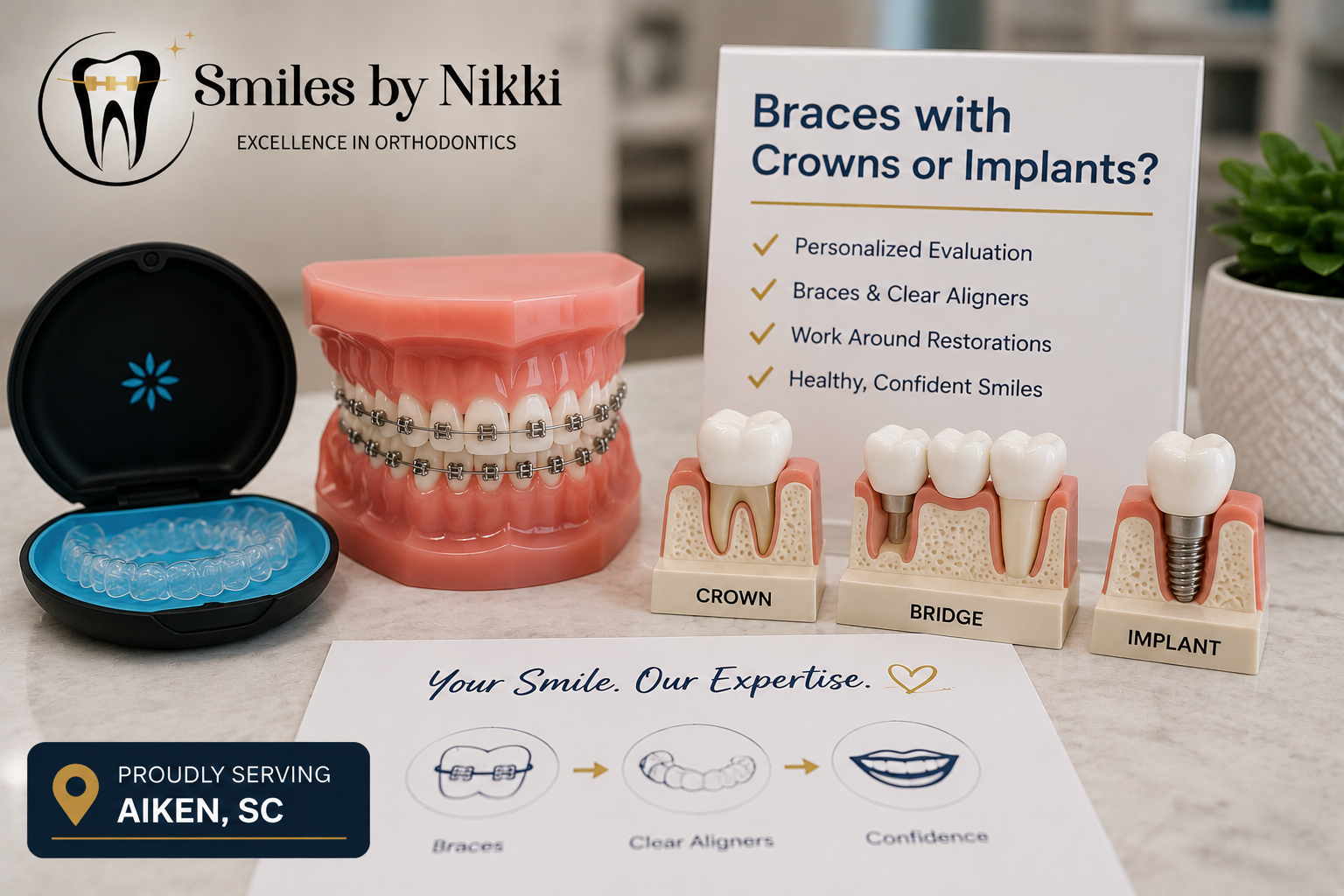
| Crown | Often, yes | A crowned tooth may still move if the natural tooth and root are healthy. |
| Bridge | Sometimes | A bridge connects teeth together, so movement may be limited or planned around it. |
| Dental implant | Often, yes, but the implant will not move | The implant stays fixed, but nearby natural teeth may be moved around it. |
Why Dental Work Matters Before Braces or Aligners
Braces and clear aligners work by gently moving natural teeth through the bone. This is different from crowns, bridges, and implants, which are dental restorations.
A crown covers a natural tooth. A bridge connects replacement teeth to nearby teeth. An implant is placed in the jawbone and does not move like a natural tooth.
Because each type of dental work behaves differently, your orthodontist needs to know what is in your mouth before treatment begins. This helps prevent damage and helps your care team build a safer, more predictable plan.
Can I Get Braces if I Have Crowns?
In many cases, yes. If the crown is on a natural tooth with a healthy root, that tooth may still be able to move during orthodontic treatment.
The main difference is how braces attach to the crown. Brackets may not bond to a crown the same way they bond to natural enamel. Your orthodontist may use a special bonding method, a different type of attachment, or clear aligners if they are a better fit.
Your crown also needs to be stable before treatment. If it is loose, cracked, uncomfortable, or has decay around the edges, your dentist may need to address that first.
Can I Get Braces if I Have a Dental Bridge?
It depends. A bridge is more complicated because it usually connects two or more teeth together. Since those teeth are joined, they may not move as easily or as separately as natural teeth.
This does not always mean orthodontic treatment is off the table. It may mean your treatment plan needs to work around the bridge. In some cases, your orthodontist may avoid moving that area. In other cases, your dentist and orthodontist may discuss whether the bridge should be adjusted or replaced after orthodontic treatment.
This is one reason adult orthodontic treatment should be planned carefully. The goal is not just straighter teeth. The goal is a healthier bite that works well with the dental work you already have.
Can I Get Braces if I Have Dental Implants?
Dental implants do not move with braces or clear aligners. An implant is fixed in the jawbone, so it stays in place while the natural teeth around it may move.
That does not mean you cannot have orthodontic treatment. It just means the implant becomes an important part of the plan. Your orthodontist may move the natural teeth around the implant or use the implant position as a guide when planning your bite.
If you are thinking about getting an implant and also want braces or aligners, it is often best to talk to an orthodontist first. In many cases, orthodontic treatment is easier before the final implant is placed.
Braces vs. Clear Aligners With Crowns, Bridges, or Implants
Both braces and clear aligners may be options, but the better choice depends on your case.
Braces can be helpful when your bite needs more detailed control. They may also be a good option if certain teeth need more guided movement.
Clear aligners may work well for mild to moderate movement and can be a comfortable choice for adults who want a more discreet option. However, aligners need good fit and strong tracking, so crowns, bridges, and implants must be considered during the scan and treatment plan.
At Smiles by Nikki, your treatment recommendation is based on your actual smile, not a one-size-fits-all answer.
What Your Orthodontist Will Check First
Before starting braces or clear aligners, your orthodontist will look closely at your teeth, gums, bite, and existing dental work.
They may check whether your crowns are secure, whether a bridge limits movement, whether implants are placed in areas that affect your bite, and whether your gums and bone are healthy enough for tooth movement.
If you have recent dental X-rays or details from your dentist about your crowns, bridges, or implants, bring them to your consultation. This can help your orthodontist understand your full dental history and plan treatment more carefully.
If needed, your orthodontist may also work with your general dentist or specialist. This is common for adult patients and can help make sure your treatment is safe and well coordinated.
Common Treatment Planning Scenarios
If you have one crown, treatment may be simple. Your orthodontist may be able to move that tooth along with the others, as long as the tooth and crown are healthy.
If you have a bridge, the plan may need to avoid separating the connected teeth. Your orthodontist may focus on improving the areas around the bridge.
If you have an implant, the implant will stay where it is. The natural teeth may move around it to improve spacing, alignment, or bite balance.
If you need future crowns, bridges, veneers, or implants, your orthodontist may recommend completing orthodontic treatment first. This can help your dentist place final restorations in better positions.
Why Adults in Aiken Ask This Question Often
Many adults in Aiken and nearby South Carolina communities want a straighter smile, but they worry their past dental work will hold them back. Crowns, bridges, and implants are common, especially for adults who have had years of dental treatment.
Orthodontic care is not just for teens. Adults often choose braces or clear aligners to improve crowding, spacing, bite comfort, and long-term smile health.
Smiles by Nikki serves patients from Augusta, Aiken, and surrounding communities with personalized orthodontic care for children, teens, and adults. For Aiken patients, the goal is simple: get a clear answer from an orthodontic team that understands how to plan around existing dental work.
Will Treatment Take Longer if I Have Dental Work?
Sometimes, but not always. Treatment time depends on your bite, the amount of tooth movement needed, and how your crowns, bridges, or implants affect the plan.
A simple case with one crown may not take much longer than a standard orthodontic case. A case with multiple bridges, implants, missing teeth, or bite concerns may need more careful planning and more time.
Your consultation is where you get a realistic timeline. Your orthodontist can explain what needs to move, what cannot move, and what results you can expect.
Can Orthodontic Treatment Damage Crowns, Bridges, or Implants?
Orthodontic treatment is planned to protect your teeth and dental work, but every case needs proper evaluation.
A crown may need a special bonding approach. A bridge may limit certain tooth movements. An implant should not be forced to move because it is fixed in the bone.
This is why you should not guess. A professional exam helps your orthodontist choose the safest approach and avoid unnecessary problems.
Should I See an Orthodontist Before Getting Future Dental Work?
If you are planning future crowns, bridges, veneers, or dental implants, it is often smart to speak with an orthodontist first. Moving the natural teeth before final dental work is placed may give your dentist a better foundation for the final result.
This is especially important with dental implants because implants do not move once they are placed. At Smiles by Nikki, Dr. Nikki Sangha can help you understand whether orthodontic treatment should happen before, after, or alongside restorative dental care.
When Should I See My Dentist First?
You may need to see your dentist before braces or aligners if you have tooth pain, loose crowns, bleeding gums, decay, cracked restorations, or an implant that feels uncomfortable.
Healthy teeth and gums make orthodontic treatment safer and more predictable. If your dental work is stable, your orthodontist can usually move forward with planning.
If something needs to be repaired first, your orthodontist can help guide the timing.
The Best First Step for Aiken Patients
If you have crowns, bridges, or implants and want braces or clear aligners, the best first step is a consultation.
At Smiles by Nikki, you can ask questions, share your concerns, and learn which treatment options may fit your smile. You do not need to know whether you are a perfect candidate before scheduling. That is what the consultation is for.
The team will review your smile, explain your options in plain language, and help you understand the next step. Aiken adults who are unsure about braces because of past dental work can schedule a free consultation to get clear answers before making a treatment decision.
FAQ: Braces With Crowns, Bridges, or Implants in Aiken, SC
Schedule a Consultation With Smiles by Nikki
If you live in Aiken, SC and have crowns, bridges, implants, or other dental work, you may still have options for braces or clear aligners.
Smiles by Nikki offers personalized orthodontic care led by Dr. Nikki Sangha for children, teens, and adults throughout Augusta, Aiken, and nearby communities. The team provides clear guidance, modern treatment options, and a welcoming experience from the first visit.
Schedule a free consultation with Smiles by Nikki today to find out what is possible for your smile.