
Adult Orthodontic Treatment: Options and What to Expect
Quick Answer: Adults can begin orthodontic treatment at many ages if their teeth, gums, and supporting bone are healthy enough. Options may include clear aligners, ceramic braces, or metal braces. The right choice depends on the teeth, bite, existing dental work, oral health, and treatment goals.
Why Do Adults Get Orthodontic Treatment?
Adult orthodontic treatment may improve tooth alignment and how the upper and lower teeth fit together. It may also make some crowded areas easier to brush and floss, although regular dental care remains necessary.
For example, a lower front tooth may move behind the others and become harder to clean. Teeth treated years ago may also shift if a retainer is lost, no longer fits, or is not worn as directed.
Orthodontic treatment does not correct every cause of tooth wear, discomfort, or jaw pain. These concerns may have several causes and need an individual evaluation.
What Treatment Options Are Available?
The right option depends on the correction needed, the health of the teeth and gums, and the patient’s ability to follow treatment instructions.
Clear aligners
Clear aligners are removable trays that move the teeth gradually. They are less noticeable than braces and can be removed for meals, brushing, and flossing.
They may suit an adult who wants a removable option and can wear the trays as directed. Someone who often forgets to put them back in after eating may have difficulty staying on schedule.
Aligners are not suitable for every tooth or bite problem. At Smiles by Nikki, clear-aligner planning begins with an orthodontic exam and detailed 3D scans. Invisalign may be available when appropriate.
Ceramic braces
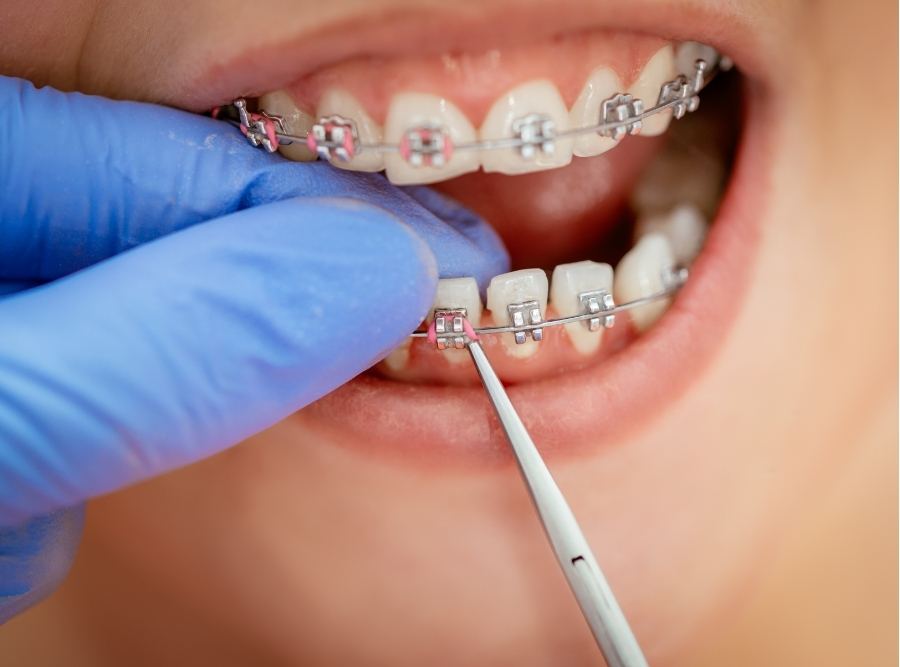
Ceramic braces use clear or tooth-colored brackets and move teeth in a similar way to metal braces. They can provide fixed treatment for many spacing, crowding, and bite concerns while being less noticeable than metal brackets.
Because ceramic braces stay attached to the teeth, treatment does not depend on remembering to wear removable trays. They still require careful cleaning, and some parts may stain without proper care.
An orthodontist may recommend ceramic or metal braces based on the tooth movements needed, the bite, bracket placement, and other treatment details.
Metal Braces
Metal braces use brackets and wires to move the teeth. They can treat many types of spacing, crowding, and bite problems and do not rely on removable trays.
They may be recommended when steady control is needed across several tooth movements. Metal braces are more visible than aligners or ceramic braces, and patients may need to avoid certain hard or sticky foods and clean carefully around the brackets and wires.
How Do Adult Orthodontic Options Compare?
| Treatment option | Removable or fixed | Visibility | Daily considerations |
| Clear aligners | Removable | Less noticeable | Must be worn as directed and replaced after meals |
| Ceramic braces | Fixed | Less noticeable than metal braces | Require careful cleaning and may stain |
| Metal braces | Fixed | More visible | Require food changes and cleaning around brackets |
The least noticeable option is not always the most suitable. The orthodontist must consider the bite, required tooth movements, oral health, and daily habits before recommending treatment.
What Should Adults Consider Before Treatment?
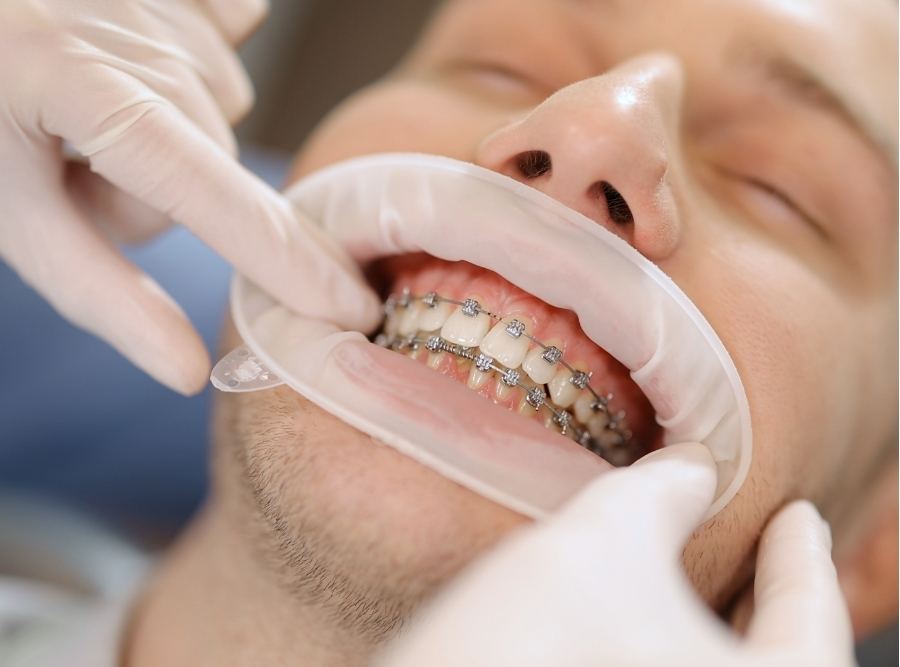
Adult treatment planning may involve gum health, missing teeth, previous orthodontic treatment, and existing dental work. Crowns, bridges, veneers, and implants can affect how braces or aligner attachments are placed.
Dental implants do not move like natural teeth. An adult with an implant and nearby crowded teeth may still receive treatment, but the orthodontist must plan the movement of the natural teeth around the implant.
Some adults need orthodontic treatment before receiving an implant, bridge, or other dental work. Care may need to be coordinated with a general dentist or another dental specialist, and active gum disease or other dental problems may need treatment first.
How Long Does Adult Orthodontic Treatment Take?
Treatment time varies from one patient to another. It depends on the problem being treated, the appliance used, oral health, how the teeth respond, and how closely the patient follows instructions.
A small amount of front-tooth movement may require a different timeline from treatment for severe crowding or a complex bite problem. Missed visits, damaged appliances, and inconsistent aligner wear may also delay progress.
The orthodontist can provide an estimated timeline after examining the teeth and discussing the treatment goals.
Is Adult Orthodontic Treatment Painful?
Mild pressure or soreness may occur after braces are placed or adjusted or when a new set of aligners is started. The teeth may feel tender while chewing, and brackets may rub against the cheeks or lips while the mouth adapts.
These effects are usually temporary. Patients should contact the practice if pain is severe, lasts longer than expected, or is caused by a loose wire, broken bracket, or poorly fitting tray.
Will Treatment Affect Daily Life?
Most adults can continue working, exercising, travelling, and completing their usual activities during treatment. They may need to plan for appointments, meals, cleaning, and a brief adjustment period.
Someone who travels often may carry an aligner case, cleaning supplies, or extra trays. A patient with braces may keep a toothbrush at work and choose foods that are easier to clean from around the brackets.
What Happens at an Adult Orthodontic Consultation?
During a consultation, Dr. Nikki Sangha can review the teeth, bite, jaw relationship, visible gum health, and existing dental work. Photos, X-rays, or digital scans may also be taken when needed.
Patients should mention previous braces or aligners, retainers, crowns, implants, missing teeth, gum concerns, and planned dental work. Bringing an old retainer or explaining where the teeth have shifted may also be helpful.
This information helps the orthodontist determine which options may be appropriate and whether care should be coordinated with another dental provider.
Frequently Asked Questions
Is Adult Orthodontic Treatment Right for You?
Age alone does not determine whether adult orthodontic treatment is appropriate. Oral health, existing dental work, the type of correction needed, and the ability to follow the treatment plan are often more important.
Smiles by Nikki provides adult orthodontic consultations in Augusta, Georgia. An evaluation can help determine whether braces, clear aligners, or another approach may be appropriate.